Lockouts · Toronto
Broken Key Extraction
The padlock on the shed has been stiff all summer. Today the key twisted, cracked at the tip, and left the end buried deep in the keyway.
Broken Key Extraction
In plain words
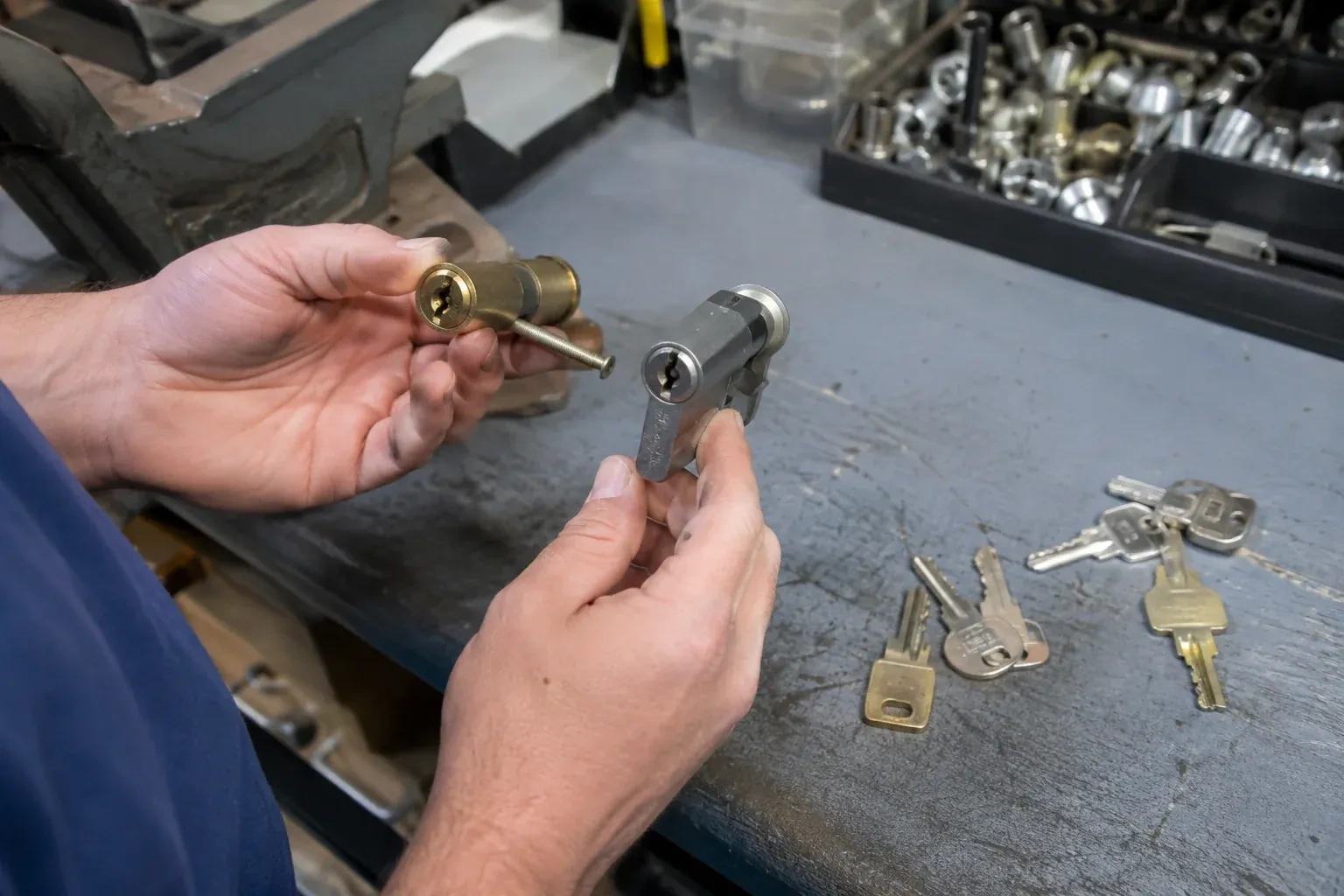
The tools are simple and precise. A hook extractor is a thin strip of spring steel with a barb at the tip; it slides along the groove of the keyway above or below the fragment, snags one of the cuts, and walks it out. A spiral extractor works like a tiny screw, threading into the ridges of the cuts and gripping as it turns. Fine-tipped extractor pliers handle a piece that shows above the face. A tension tool brings a turned plug back to rest. None of these push inward, which is the whole point: the piece comes out the way it went in and the cylinder stays whole.
How the visit goesYou were locking up on the way out when the key broke in the lock. Now the door is unlocked, a piece of key is jammed in the cylinder, and you were already running late for work.
Toronto
How the visit goes
How the piece is sitting
The first look is at the fragment itself, without touching it. Does any of the blade show above the cylinder face, or is it flush or deeper still? Is the plug sitting at its normal rest position, or did it stop partway round when the key gave way? A protruding piece in a resting plug is the simplest case. A fragment past the shear line in a rotated plug means the pins are holding it, and the plug has to be brought back before anything will slide. Reading this correctly decides which extractor comes out of the case and spares the keyway from needless probing.
When the piece is standing proud
A fragment that shows above the cylinder face looks like the easy case, and it is, provided nobody pushes on it. The locksmith grips it with fine-jawed extractor pliers or needle-point tweezers made for the purpose, steadies the cylinder with the other hand, and pulls straight out along the line of the keyway. If it resists, the plug is checked for rest position rather than the pull being increased, because a piece forced against lifted pins can bend them. A trace of dry lubricant at the keyway entrance eases a tight fit. The piece comes out whole, and the lock is ready to test.
A key cut from the pattern, not the wear
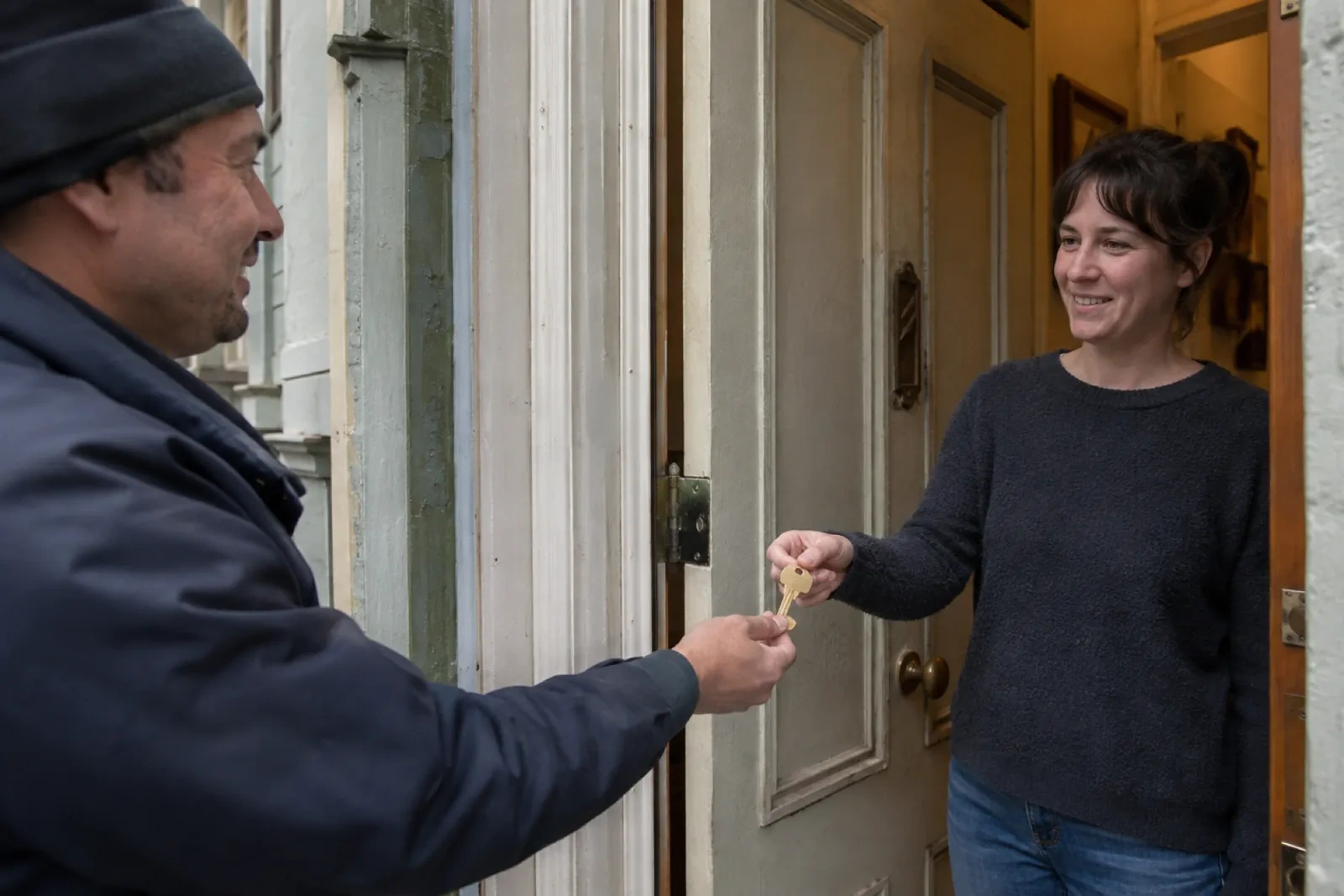
You leave with a key that was cut to the lock's original specification rather than traced from the tired blade that just failed. That difference shows every time you use it: it seats fully, lifts each pin cleanly and turns without a wiggle. Two or three copies made from that fresh cut give you spares that are as good as the first. The old bent or thinning keys that shared the ring are worth retiring now, because a key that has started to bend has started to crack, and the next one to snap will be one of them.
Broken Key Extraction
In the van
- Manufacturer-approved cylinder lubricant
- Compressed air for the keyway
- Lock de-icer
- Key blanks and code cutter
- Tension tool for resetting the plug
What affects the quote
Same fees day, night or weekend
1Locked or unlocked door
If the door is locked, the extraction is followed by opening it, which is quoted as its own part of the visit. If the door is open, the work is extraction and securing.
2Removing the cylinder to free it
A deep or bound fragment may need the cylinder taken off the door and the plug pushed out from behind on the bench. That disassembly and reassembly is quoted on its own.
3Anything added since the break
Glue, a second key or marks from a screwdriver mean clearing and sometimes repair before extraction can start, and that added time is named in the quote.
Broken Key Extraction: questions
Can a new key be made from the two broken halves?
Usually. Laid end to end, the halves show the full set of cuts and identify the blank, and a locksmith reads them with a gauge and cuts a fresh key to those depths on a code machine. That is better than tracing the broken blade on a duplicator, because a worn key copied is a worn key repeated. If a spare or the key code exists, that is used instead.
Should I rekey or replace the lock afterwards?
Only if the inspection finds a reason. A clean cylinder with sound pins goes straight back to work with a new key. Rekeying makes sense when the pins are worn and sticking, or when a lost or unaccounted key shares the same cut. Replacement is for a cylinder that is corroded, cracked or of a grade that will keep eating keys. Each is offered as its own decision, not bundled in.
What information helps when I call?
What the key was in: a front door deadbolt, a knob, a padlock, the driver's door or the ignition. Whether any of the key shows above the face. Whether the key turned before it broke and whether the door is locked now. Whether anything has been inserted since. Whether you have the other half, a spare or the key code. And whether the property is owned, rented or managed.
Lockout Services
Broken Key Extraction near you
Residents and business owners in Toronto can use this list to find the service that fits, then read what it involves before anyone comes out. Emergency openings are here. So are rekeys, lock changes, deadbolt and high-security upgrades, commercial door hardware, master keys, safes and key cutting.