High security · Toronto
Safe Installation & Servicing
A community group counts the weekend's raffle and bake-sale cash on a kitchen table, then carries it home in a tote bag until the bank opens Monday, because there has never been anywhere safer to leave it.
Safe Installation & Servicing
In plain words
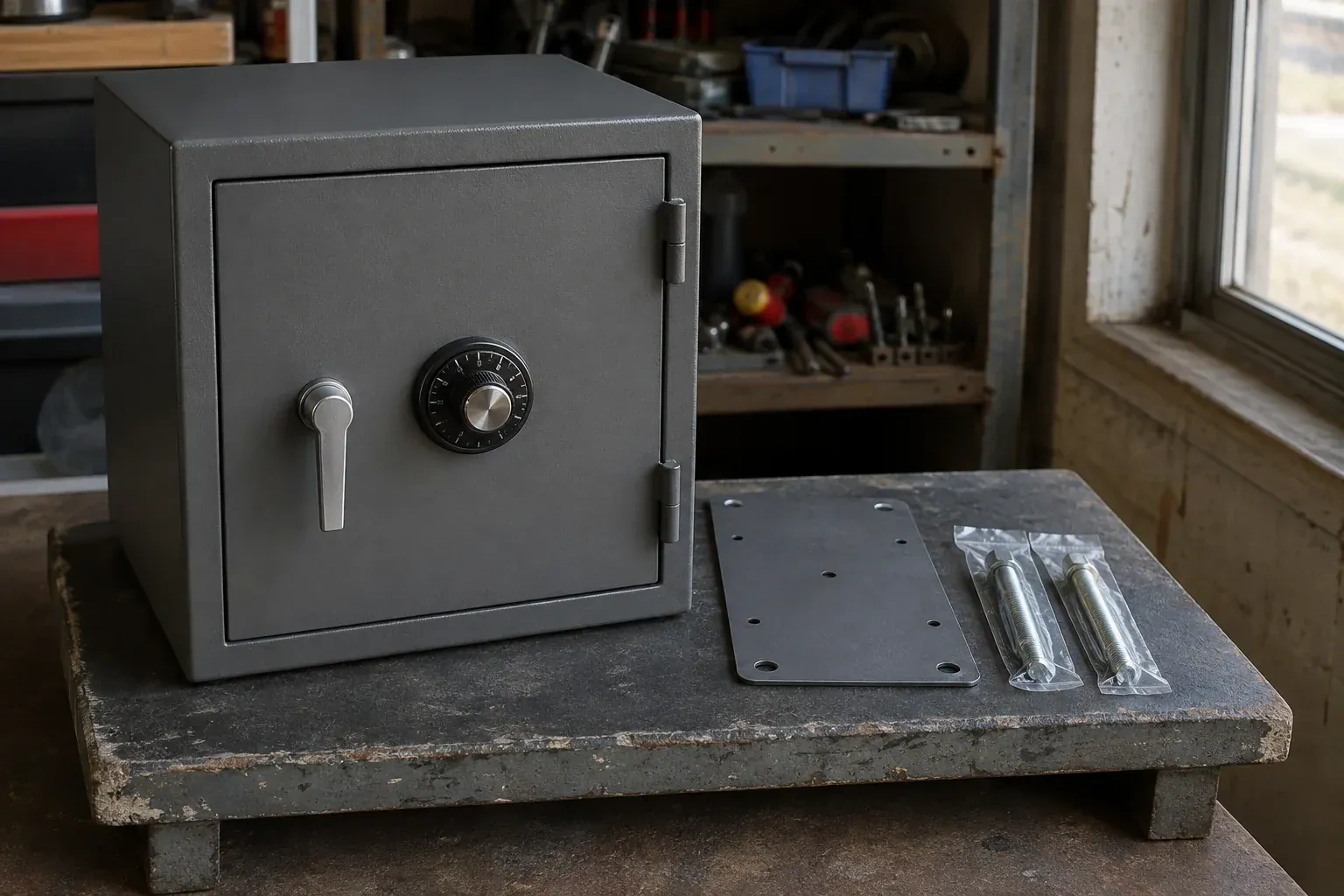
A safe that is not bolted down is not really a safe, just a heavy box that a thief can carry to somewhere quieter to open. Anchoring is the part of installation that turns a portable object into a fixed one: the floor or wall construction is identified first, correct anchor bolts and hardware are chosen for concrete or a wood subfloor, and the unit is leveled and torqued into place. The same principle applies to an existing safe discovered sitting loose in a corner; it can usually be anchored properly without moving it far.
How the visit goesBehind the filing cabinets sits a heavy floor safe nobody ever bolted down, left exactly as the last owner set it. It opens fine, but a determined pair of hands could simply tip it into a van.
Toronto
How the visit goes
What the safe actually needs to hold
Before any hardware is chosen, the locksmith asks what will actually sit inside: cash from a till, jewelry, firearms, paper contracts, backup drives, or some mix of all of it. Each of those has a different enemy. Cash and jewelry are mainly at risk from tools and time, so a burglary rating matters most. Paper is mainly at risk from heat, so a fire rating matters most, and digital media needs a much lower internal temperature than paper to survive the same fire. Answering this question first is what keeps the rest of the visit from guessing.
Setting it level and in its final position
Once the safe is on site, it is moved into position with a hand truck, dolly, or rigging suited to its weight, protecting door frames and flooring along the way rather than dragging it across a room. It is set level using shims where the floor is slightly uneven, since a safe that sits even a little off level can bind its own bolt-work over time. The final position also leaves enough clearance for the door to swing fully open and for anchor bolts to be reached from underneath or behind.
Keeping a fire-rated interior dry
A fire-rated safe protects its contents partly by sealing tightly, and that same seal traps ordinary household humidity over months and years. Opening the door for a few hours every few weeks lets that trapped air exchange with the room, and a desiccant packet placed inside absorbs what builds up between those openings, provided it gets refreshed on a regular schedule rather than forgotten. A musty smell or a document that feels soft at the edges is the interior asking for that airing out sooner rather than later.
Safe Installation & Servicing
In the van
- Mounting plate
- Concrete anchor bolts
- Torque wrench and socket set
- Nine-volt backup battery
- Bolt-work lubricant
What affects the quote
Same fees day, night or weekend
1Anchoring difficulty at the chosen spot
A straightforward concrete floor is the simplest case, while a wood subfloor needing joist location, or a tiled surface needing an alternative fastening point, both add steps to the anchoring work.
2Documentation requested
Some customers want photographs of the anchoring, a written note of the model and ratings, or both, usually to satisfy an insurer, and preparing that paperwork adds a little time to the visit.
3Condition of an existing safe
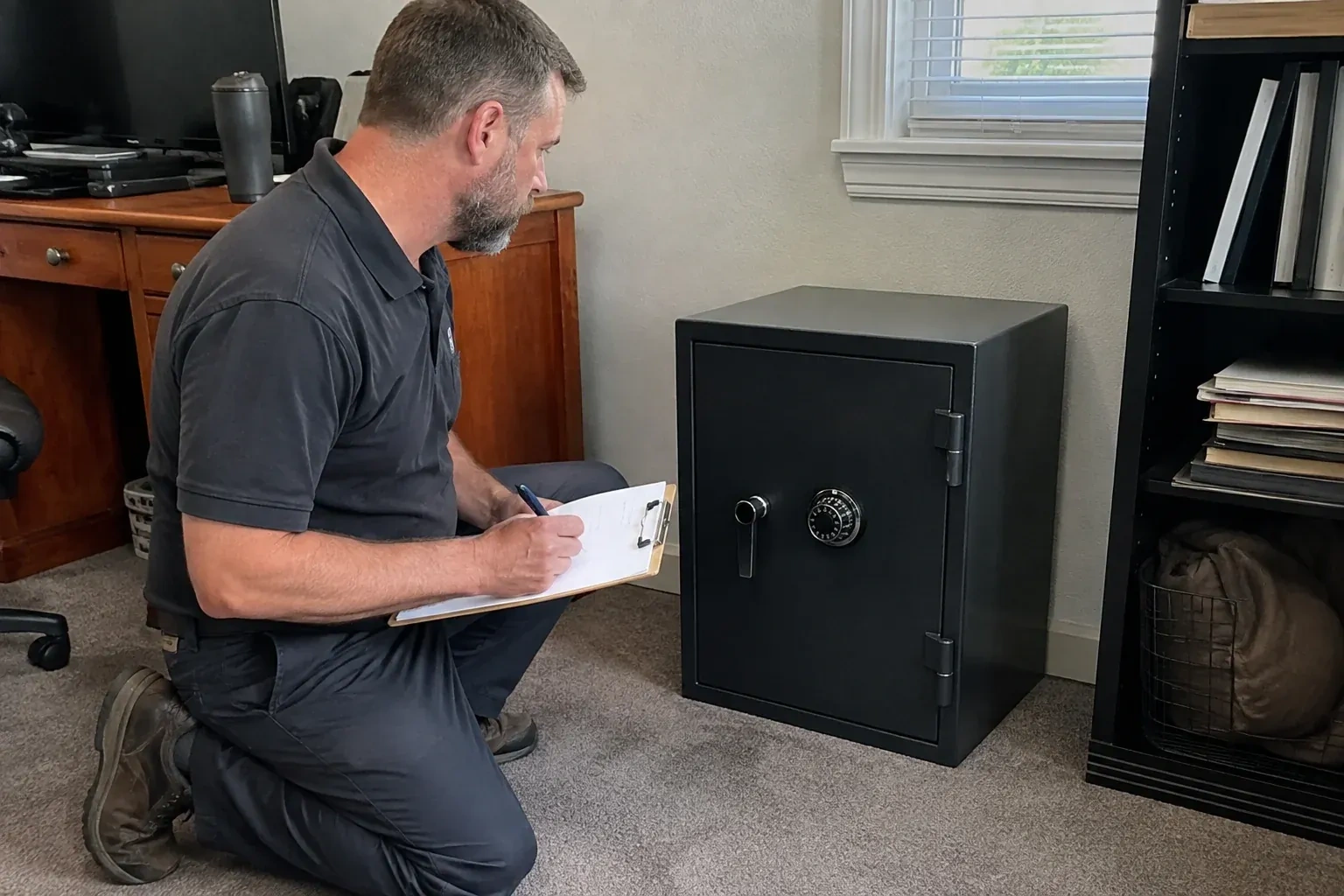
Rust on hinges, stiff or grinding bolt-work, a lock that hesitates, or anchoring that was never done all add work beyond a routine check on a servicing visit.
Safe Installation & Servicing: questions
Can a safe be concealed inside a closet or behind a panel?
Yes, provided the spot chosen still allows full anchoring and enough clearance for the door to swing open completely. A closet floor, the back of a built-in cabinet, or a recessed wall cavity can all work, though each limits the size of unit that will actually fit and reach the anchor points properly. Balancing concealment against how often the safe gets opened is worth discussing before a spot is chosen.
Is a fireproof safe also resistant to a break-in?
Not automatically. Fire resistance comes from an insulated, sealed construction that is not necessarily built to resist tools, while burglary resistance comes from thick steel and hardened plate that is not necessarily built to survive a sustained fire. Some units are built and rated to both standards at once, but a fire-only safe left unrated for burglary should not be assumed to hold up against a determined attempt with tools.
Can a safe hold both cash and paper documents at the same time?
Yes, though it is worth knowing the interior conditions suited to each are slightly different. Paper gains real heat protection from a fire-rated lining, but that same sealed lining traps humidity, so paper stored inside needs the same periodic airing and a desiccant packet as any fire-rated interior. Cash and other valuables mainly need the tool resistance of the body and door and tolerate the sealed environment more easily. A single well-chosen unit can hold both together without conflict, particularly with paper kept in a sealed folder or bag inside.
High Security Locks
Safe Installation & Servicing near you
Residents and business owners in Toronto can use this list to find the service that fits, then read what it involves before anyone comes out. Emergency openings are here. So are rekeys, lock changes, deadbolt and high-security upgrades, commercial door hardware, master keys, safes and key cutting.