Change or rekey · Toronto
Deadbolt Installation
The bolt on the front door is keyed on both sides. Getting out at night means finding the key in the dark, and with a toddler in the house you have decided the inside should turn by hand.
Deadbolt Installation
In plain words
For a main exit door the hardware choice has a safety side as well as a security side. A door people leave a home through should open from the inside without a key, so a single-cylinder deadbolt with an inside thumb-turn is the standard fit rather than a bolt keyed on both faces. Where glass sits close to the lock, the answer is a captive thumb-turn, laminated glass, or a tested security-film system with its specified frame attachment, not a key on the inside. The locksmith explains the trade-offs, fits the lock that keeps a stranger out and the family able to leave, and shows everyone the thumb-turn.
How the visit goesSomeone tried the door last winter. The frame took it, but the strike plate is bent, one screw hole is stripped, and the bolt sits in the pocket at a slight angle. It still locks, and it still bothers you every night.
Toronto
How the visit goes
Where the bolt should sit on the door
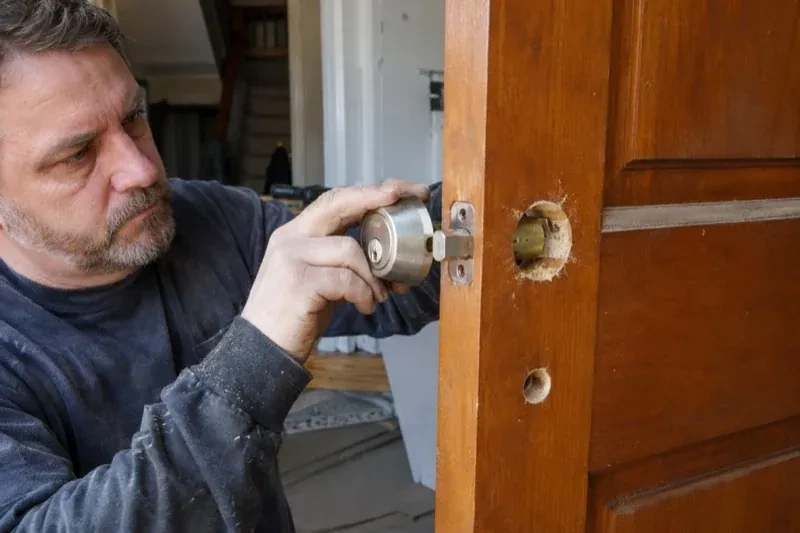
On a door with no deadbolt yet, its height is not fixed by the manufacturer but by the door in front of you. The usual spot is 140 to 150 mm above the centre of the knob, which places the bolt near the strongest part of the lock stile and keeps both locks within one comfortable reach. The locksmith checks that this height misses any glass, decorative panel, hinge line or the wood block inside an insulated door, and that the frame behind that spot is solid rather than a gap between shims. If a storm door or screen door shares the opening, the bolt's thumb-turn and cylinder have to clear it as well.
Marking and boring a fresh door
With the height agreed, the paper template is folded over the door edge and the two centres are marked: the cross bore on the face and the edge bore on the stile. A boring jig clamps over the door so the hole saw cannot wander, and the cross bore is cut from both faces to leave clean veneer or skin on each side. The edge bore is drilled with a 25 mm bit through the stile until it meets the larger hole. The locksmith then traces the bolt faceplate on the edge and chisels a shallow mortise so the plate sits flush, keeping the cut inside the lines so the edge stays sound.
A bolt with a full, deadlocked throw
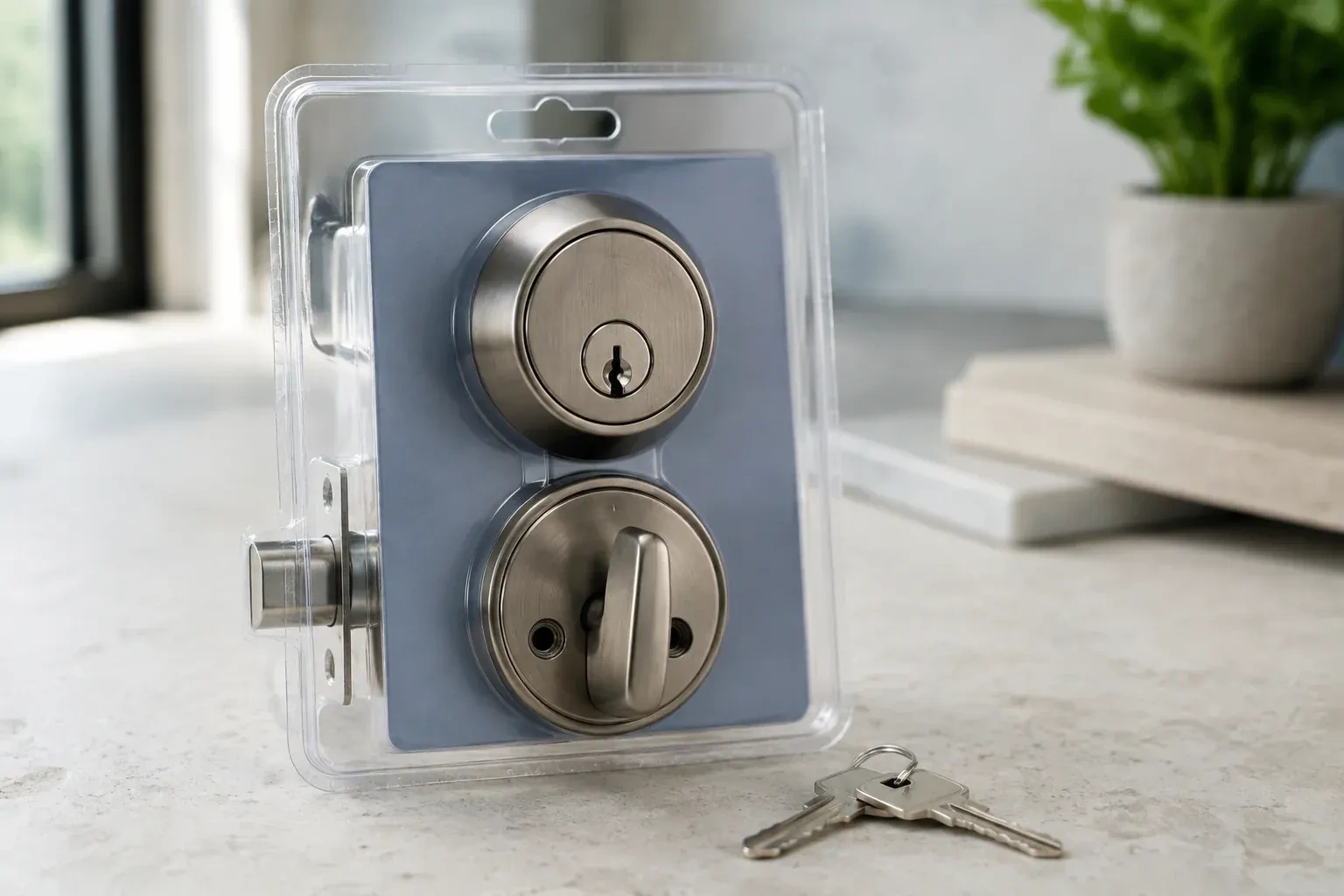
What you feel at the end is a bolt that travels its whole length into the frame with one turn and stops with a definite click, which is the deadlocking position that stops the bolt being pushed back from the edge. From outside, the key turns a cylinder that sits in a collar which spins if gripped. From inside, the thumb-turn moves the same bolt without a key. The locksmith shows you both, throws the bolt with the door closed so you hear it seat, and hands over the packaging with the model, finish and backset written on it for the day a matching lock is wanted on another door.
Deadbolt Installation
In the van
- Rekeying pins and key blanks
- Single-cylinder deadbolt
- Manufacturer's bore template
- Bolt faceplate or drive-in collar
- Boring jig and 54 mm hole saw
What affects the quote
Same fees day, night or weekend
1Non-standard bore or backset
Older doors with a small cross bore, an unusual backset or a mortise lock case need adapting or filling before a modern deadbolt fits, and that preparation is quoted before work begins.
2Storm door or restricted clearance
A tight storm door, a narrow lock stile or a decorative panel at bolt height can require low-profile trim or a shifted position, which is settled and quoted at the assessment.
3Strike and frame reinforcement
A reinforced strike with long screws is standard; a full-length jamb reinforcer, a strike box or repairs to a split jamb after a forced entry are extra items quoted on their own.
Deadbolt Installation: questions
How do I look after a deadbolt once it is installed?
Very little is needed. Each spring and autumn, lock the door from inside and feel whether the bolt still goes home without the door being pulled; if it hesitates, the door has moved with the season and a small strike adjustment restores it. Whatever lubricant the lock's own maker specifies keeps it smooth, often a dry PTFE or graphite type in the keyway and along the bolt, though some cylinders are meant to be serviced with oil. In winter, wipe road salt off the outside trim to protect the finish.
I just moved in. Should the new deadbolt be keyed to a new key?
It is a good moment for it. Nobody knows how many copies of a previous owner's key exist, so pinning the new bolt, and the rest of the exterior doors, to one fresh key retires all of them at once. Lock manufacturers list a move as one of the main reasons to rekey. You come away with a known number of keys, each tested in every door it is meant to open.
How long should the bolt be?
The bolt should extend at least 25 mm into the frame, which is the standard throw for a dwelling's entrance doors and the length most residential deadbolts provide. Part of the bolt stays inside the door for support while the rest sits in the pocket. A hardened steel insert that spins under a saw blade is a common feature worth having on doors that face a street or laneway.
Change or Rekey Locks
Deadbolt Installation near you
Residents and business owners in Toronto can use this list to find the service that fits, then read what it involves before anyone comes out. Emergency openings are here. So are rekeys, lock changes, deadbolt and high-security upgrades, commercial door hardware, master keys, safes and key cutting.